
Introduction
The end of 2025 saw an unprecedented decision in the canton of Zug, Switzerland, regarding corporate environmental accountability for the consequences of climate change. Four fishermen come out, heads held up high. They have just learned that their lawsuit was considered admissible against the concrete giant, Holcim.
The inhabitants of Pari Island, a tropical, Eden-like island at risk of sinking in 2050, speak of increasingly unusual weather. They are faced with frequent and violent floods accompanied by severe erosion. Having witnessed not only inestimable material damage, they also suffer a loss of income from tourism. They find themselves forced to pay for resources that had once come for free and easy of access, notably water.
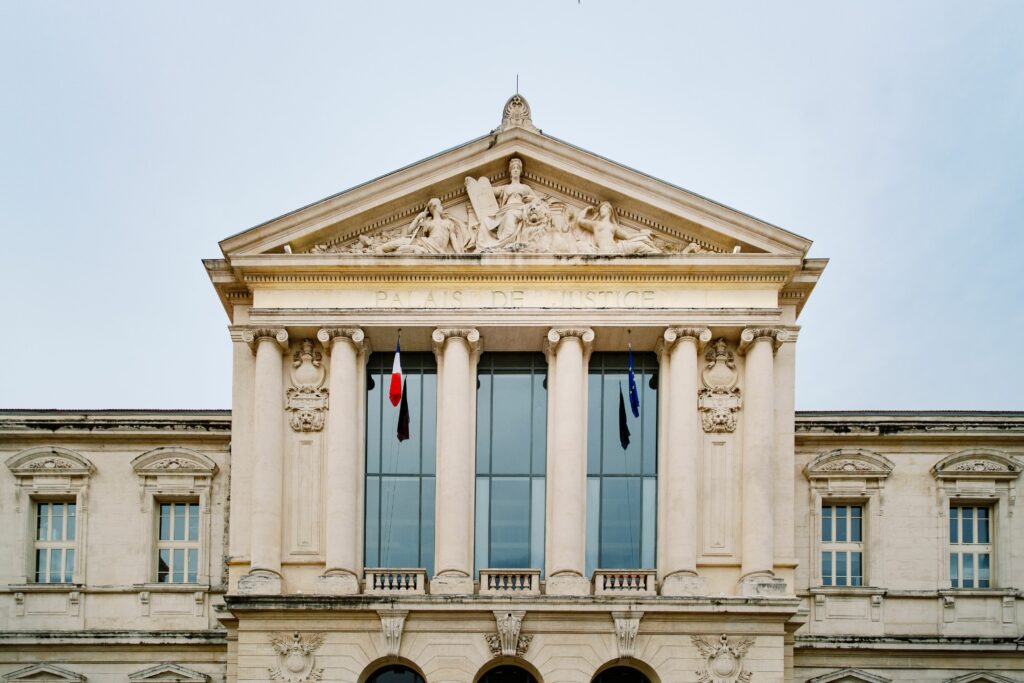
More recently, under the rays of a scorching heatwave: another landmark case of corporate environmental accountability. Total Energies was convicted for failing to comply with due diligence requirements on June 25, 2026. The Paris judicial tribunal has ordered them to include its indirect emissions and those of its clients in their risk mapping1 : a new vigilance plan is expected in 6 months. The company has more recently declared its intention to challenge the ruling.
Opinions and sensibilities regarding individual climate responsibilities may differ, but the justice system (in this case, Swiss and French) might decide otherwise. It is no longer possible to ignore the scale of pollution emitted by multinational giants. Whilst consequences are borne by local inhabitants, profits enjoyed by some local officials and shareholders far removed from the field. A fundamental question arises, not only about climate justice, but about the other side of the coin: corporate climate accountability imposed by the justice system.
The rise of corporate climate accountability in Europe
In Western Europe, there has been a rise of disputes not only over environmental damage. This includes those directly attributable to a given company (deforestation, water pollution, poor waste management…). This also concerns climatic effects invisible to the naked eye, which stem from emissions deemed excessive by a company.
Besides the dispute with the fishermen of Par Island, other cases regarding corporate environmental accountability have been heard by courts in Europe:
- The admissibility of a legal action brought against TotalEnergies (Belgium) for its contribution to climate change, notably through droughts and violent storms
- The confirmation by the Hague Court of Appeal that Shell was obliged to “combat dangerous climate change,”. It was to limit its carbon dioxide emissions, and align its climate policy accordingly. Although, this ruling has since been overturned.
The plaintiffs of Pari island call out not only large emissions that exacerbate climate change, but the active harm that this brings them. This includes loss of income and the progressive disappearance of their sources of livelihood. In other words, the threat of the possibility of simply inhabiting the land that they live on.
In the eyes of companies, and notably those that in court over this issue, the problem boils down to indirect emissions. These are otherwise known as scope 3 emissions2.
But how much responsibility is an enterprise to bear? TotalEnergies and Holcim have argued that climate change is a problem that concerns the public. In other words : everyone, and especially public authorities.
What international guidelines and French legal frameworks say about corporate climate accountability
On the one hand, this argument aligns with the UN’s guiding principles on business and human rights. It states that it is primarily the responsibility of states to adopt protective measures for their citizens. Only then are companies to comply with applicable laws and respect human rights frameworks.
On the other hand, the OECD Guidelines for Multinational Enterprises on Responsible Business Conduct explains the need for three key elements :
- Ongoing verification of the effectiveness of climate strategie
- The establishment of constructive exchanges with stakeholders
- The preparation of emergency plans in case of serious damage resulting from their activities.
This leads us to a thorny question: how can we implement mitigation or emergency plans if the environmental effects of emissions cannot be directly traced to a particular source?
Some countries have legislation that directly addresses this “conundrum”, one of it being France. In this context, the use of article 1252 of the Civil Code can be interesting to analyse disputes attributed to “climate damage”. Stemming from the 2016 reform on civil liability, this article deals with damages caused by “the acts of persons for whom one must answer or things one has in one’s custody.” Its interpretation could extend to indirect or systematic climate damage. This is only if a given climate damage can be objectively linked to the global increase in GHGs. It is therefore no longer a question of individual responsibility, but rather of the collective and measurable contribution of company emissions to the global climate crisis.
Solutions
A question that sums up the debate: how far does can companies be expected to apply due diligence ? Until what point can corporate environmental accountability be reinforced? The Scope 3, for example, is essential as part of a carbon footprint assessment,. It is recommended, although not mandatory, fora company’s vigilance plan. Faced with these questions, what can companies do to position themselves in this context of regulatory frameworks in the making?
With years of experience and fruitful exchanges with companies and civil society actors, Ksapa has identified concrete courses of action. These solutions will help companies to comply with ESG requirements while avoiding the pitfalls of greenwashing. This is essential not only for compliance, but also for its reputation and its financial well-being.
- The systematic integration of scope 3 emissions in a process of transparency, accompanied by mitigation measures
- The respect and consistency of its public commitments with its concrete actions in terms of environmental and social performance
- The construction of frameworks for dialogue with stakeholders and actors in supply chains, particularly for conflict resolution.
- We were thus able to hold interesting discussions with our partners in a framework of feedback, bringing together companies, trade unions, and civil society organizations, on mediation.
What next?
In a geopolitical context that is changing like shifting sands, Ksapa allows companies to dissect regulatory and strategic issues in the development of vigilance plans. We offer a nuanced reading of legal, environmental, cultural, and social contexts and public policy.
The climate crisis is leaving humanity, especially major historical emitters, with no choice but to review its practices and adopt a more attentive approach to the effects, even distant, of its actions. This is above all a matter of urgency: the private sector plays a key role in this process. Companies can review their vigilance plans to ensure that they translate to concrete action. Through this, companies can also play a part in the ecological transition and build a better future for all.
- France’s Duty of Vigilance law – Business and Human Rights Centre
- The standard carbon accounting framework (GHG Protocol), in line with the publications of Richard Heede and the Climate Accountability Institute, allows scope 3 emissions related to the combustion of fossil fuels to be attributed to an individual non-state entity such as the parent company of a group.

Ruth Julim
Ruth is a junior program officer at Ksapa, contributing to the coordination of various projects under the SUTTI programs. She is a master's student in her second year of Development Economics – Public Policies and Projects at Université Paris 1 Panthéon-Sorbonne.
Driven by an interest in sustainable development and economic transformation, she weaves together socio-cultural insights and financial perspectives with hands-on experience. At CEDRE - Secours Catholique, she was able to get manage socio-cultural projects, build links between different stakeholders, as well as conduct in depth interviews with beneficiaries, local community members, and volunteers.
Having been a part of a youth collective for the rights of the indigenous population of Central Borneo, Indonesia, she has a strong interest in the links between human rights, extractivism, and the consequences of climate change.
Ruth speaks English, French, Indonesian, Mandarin Chinese, and German