
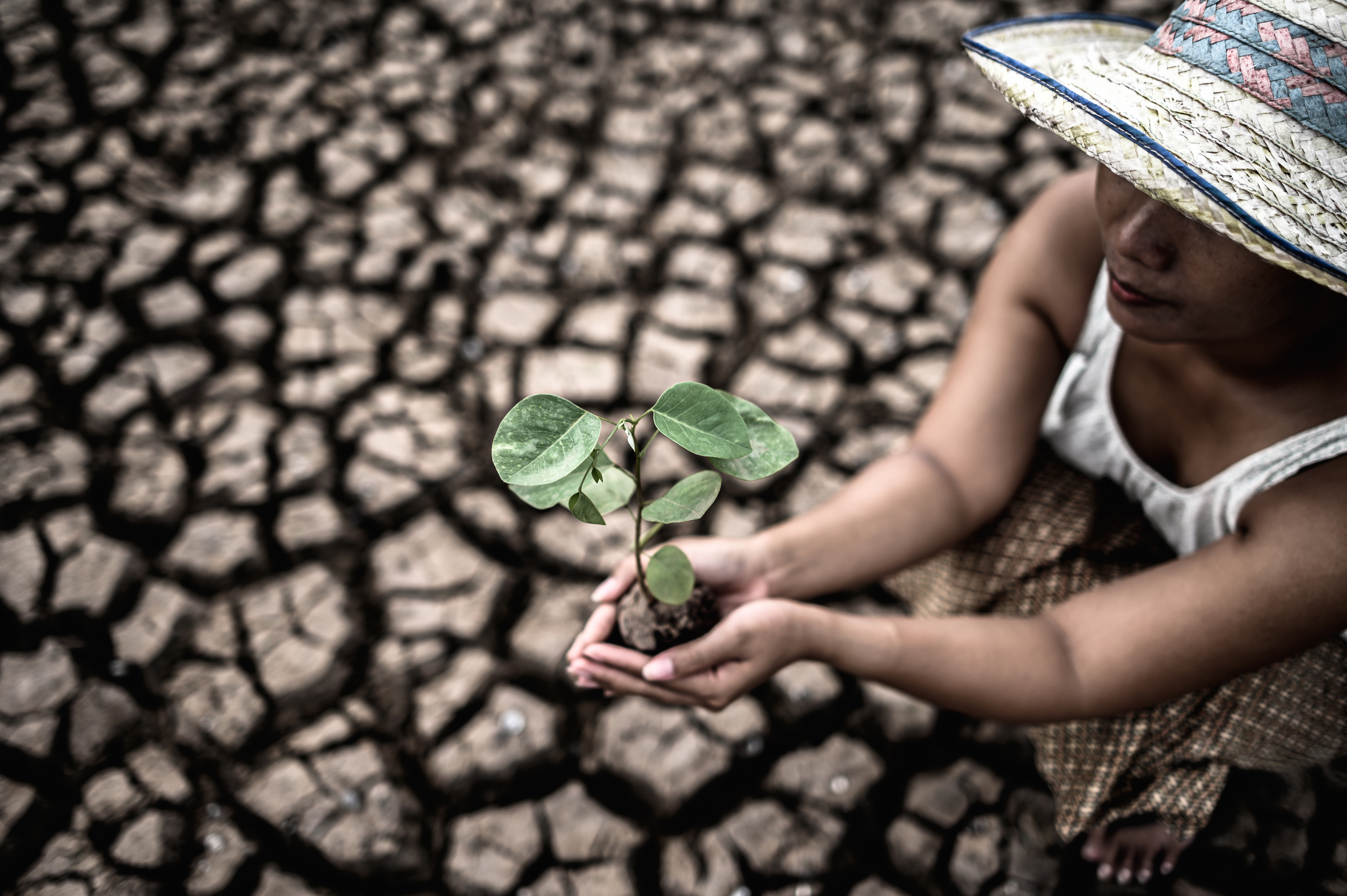
In Sri Lanka, our client tyre manufacturer Michelin surveyed the smallholder rubber farmers it supports through Ksapa’s SUTTI program to gauge how far El Niño is affecting their plantations. Early responses describe trees shedding leaves and latex output grinding to a halt. That field-level signal is not an isolated case. It lands on top of a wider set of pressures already reshaping three commodities central to global manufacturing and consumer goods: natural rubber, cocoa and coconut. A renewed delay to the EU’s deforestation law, a sharp rally in Indian rubber prices, a collapsing guaranteed price for Ivorian cocoa, and chronic underfunding of coconut replanting in the Philippines are converging at once. Against this pile-up of climate, regulatory, economic and social variables, capacity-building models paired with digital monitoring — the approach Ksapa has built through SUTTI — look less like a nice-to-have and more like the baseline infrastructure buyers now need.
A Field Signal: El Niño Hits Sri Lankan Rubber Farming
The SUTTI program Ksapa runs in Sri Lanka works with smallholder rubber farmers on better agricultural practices and digital monitoring tools. That existing infrastructure, built around the RIVER project and its multi-stakeholder coalition, is what allowed Michelin to move quickly and survey the farmers it already works with about El Niño’s impact on their plots. The responses collected so far — still partial — point to two converging problems: premature or excessive defoliation on rubber trees, and a slowdown or outright stop in latex output among a share of respondents.
This ground-level finding echoes international climate warnings. The World Meteorological Organization has flagged an intensifying El Niño episode, with heightened risk of extreme weather across several regions that produce agricultural commodities. For rubber trees specifically, early or prolonged leaf loss reduces photosynthetic capacity, which then shows up in reduced latex flow in the months following the heat or water stress. This is not unique to Sri Lanka: it fits a broader pattern of climate-driven strain on plantation ecosystems that Ksapa has tracked in its work on building more resilient agricultural supply chains.
For a company like Michelin, sourcing natural rubber across multiple continents, the practical value of this kind of survey lies less in the headline finding than in the speed at which it could be gathered. A conventional risk assessment relying on national agricultural statistics or annual supplier audits would likely surface a production dip only once it has already reduced deliveries — by which point the buyer has lost months of lead time to adjust sourcing, support farmers, or communicate with downstream customers. A digitally enabled farmer network, by contrast, can be surveyed within days of an emerging concern, turning anecdotal field reports into a structured, if still preliminary, evidence base for decision-making.
Having a SUTTI-style program already active on the ground — as was also the case in Indonesia, where Michelin and Volkswagen Group back the CASCADE project — is precisely what gives a buyer the ability to verify a climate shock in near real time, rather than discovering it later through lagging national production statistics. The lessons drawn from the joint Volkswagen Group – Michelin rubber program in Indonesia, whose qualitative impacts Ksapa has documented, show that a training-plus-digital-monitoring setup also helps buyers better characterize, on the ground, the actual scale of climate shocks hitting their farmers — a valuable capability just as El Niño starts weighing on yields.
Commodities Already Under Pressure Before El Niño Hit
The Sri Lankan climate shock is not landing on a blank slate. Three commodities of strategic importance to global industry — rubber, cocoa, coconut — are entering this new climate season already weakened, which mechanically amplifies the consequences of any additional weather shock.
Rubber faces two parallel pressures. On the regulatory side, the Council of the European Union confirmed a further delay to the EU Deforestation Regulation (EUDR), now due to apply from 30 December 2026 for large operators, with an additional grace period for smaller businesses running into mid-2027. Ksapa has tracked how this repeated postponement plays out for companies caught between compliance investment and shifting deadlines, notably in its analysis of why businesses remain divided over the EU’s due-diligence agenda, and in its practical guidance on complying with the EUDR itself. On pricing, the Indian market has seen a sharp rally: according to market data published in early September 2026, Indian RSS3 natural rubber prices rose 33.5% year-on-year, a move directly tied to a production shortfall in Indonesia and Thailand — two of the world’s leading producing countries, both grappling with aging plantations and repeated weather disruption.
Ivorian cocoa is going through a shock of a different kind but with equally structural implications. On 1 September 2026 in Abidjan, at the launch of the new coffee-cocoa season, the Ivorian government confirmed via Reuters that it would keep the guaranteed farmgate price for cocoa at 1,200 CFA francs (roughly $2.12) per kilogram for the 2026/27 season, down from 2,800 CFA francs at the opening of the previous season — a cut of more than half. That drop reflects the sharp retreat in world cocoa prices since late 2025, following record highs reached only months earlier. For Ivorian farmers, whose incomes had risen sharply during the previous season’s price boom, this reversal represents a direct income shock, in a sector that Ksapa has long described as facing intertwined environmental, social and economic challenges in its dedicated analysis of sustainable cocoa cultivation.
Philippine coconut, finally, shows a more mixed picture. On the trade side, momentum is strongly positive: coconut product exports rose 34% in 2025 to reach $3.6 billion, according to Department of Trade and Industry figures reported by local business media, driven by rising global demand for health and wellness coconut products. But that commercial boom masks a structural weakness upstream: the Philippine Coconut Authority is pushing for full control over the coco levy fund to accelerate replanting programs, which it considers chronically underfunded given how fast coconut palms are aging — a dynamic Ksapa documented firsthand at the World Coconut Congress in Manila in its analysis on building resilient coconut supply chains. One regulatory detail matters here: unlike rubber and cocoa, coconut falls outside the scope of the EUDR, which covers only cattle, cocoa, coffee, palm oil, rubber, soy and wood, as confirmed by Australia’s Department of Agriculture in its guidance on the EU regulation. Coconut therefore escapes that specific compliance pressure, but remains fully exposed to climate risk and to the question of who funds plantation renewal, as Ksapa lays out more broadly in its review of the challenges and transformations of the global coconut value chain.
Responding at Scale: The Case for SUTTI-Style Programs
Layer a climate shock like El Niño on top of a shifting regulatory calendar, volatile rubber and cocoa prices, and chronic underinvestment in coconut replanting, and a piecemeal, commodity-by-commodity response quickly runs out of road. This is the logic behind the SUTTI-style program model Ksapa has built out over several years across Sri Lanka, Indonesia and other geographies.
SUTTI’s core idea is to combine on-the-ground training with a digital platform to strengthen three things at once: farmers’ technical capacity, their access to investment, and buyers’ real-time visibility into the state of their supply chains. This hybrid approach moves beyond one-off audits and instead installs a permanent channel between the buying company and first-mile producers, grounded in a clear-eyed read of the specific vulnerabilities in each sourcing geography — the kind of assessment Ksapa builds through its work on country sourcing risk mapping.
That real-time monitoring capability matters even more in a context where, as Ksapa argues in its analysis of the new geopolitics of critical supply chains, traceability is no longer a compliance cost but the raw material of a resilient sourcing strategy. A program that, like SUTTI, collects operational and behavioral data on smallholder populations typically invisible to conventional audit systems turns a risk that would otherwise simply be absorbed — a heatwave, a price collapse, a regulatory delay — into an actionable signal that lets companies adjust support programs quickly.
Scaling this kind of model also requires financial instruments matched to the real, often modest, needs of individual smallholders — a gap far below the scale international climate finance typically targets. Ksapa makes this point directly in its work on impact finance for agricultural supply chains, which stresses the need to bridge available climate capital with the comparatively small sums smallholders actually require. That same logic of income diversification and agronomic resilience-building underpinned the joint Michelin-Porsche program in Indonesia, structured around three pillars: rubber productivity, income diversification, and awareness of social and human rights.
Concretely, this kind of model delivers value at three distinct levels for buying companies.
- First, early detection: a direct channel with farmers means a climate shock — like the defoliation reported in Sri Lanka — can be identified months before it shows up in delivered volumes or aggregated national production statistics.
- Second, corrective action: field-level findings let companies adjust training programs mid-season, for instance shifting modules toward water management or canopy protection rather than pure yield optimization.
- Third, regulatory evidence: with the EUDR, the Corporate Sustainability Reporting Directive (CSRD) and the Corporate Sustainability Due Diligence Directive (CSDDD) all demanding documented, traceable due diligence on where and how commodities are produced, having verifiable, geolocated, up-to-date field data is a compliance asset that goes well beyond managing a single climate event. Ksapa’s own experience deploying SUTTI across worker and smallholder populations in Southeast Asia and Sub-Saharan Africa reflects a broader trend documented through its win-win trade model in Indonesia, where every euro invested through the program is estimated to generate up to 25 euros of ground-level value over a decade.
For international buyers, investors and policymakers watching these three sectors from outside the producing regions, the practical takeaway is that commodity risk can no longer be assessed one variable at a time. A rubber sourcing strategy that only tracks price, or a cocoa strategy that only tracks EUDR compliance deadlines, will miss the compounding effect of a poor rainy season arriving on top of an already-squeezed farmer margin. Building that compound view requires investing, ahead of the next crisis, in the kind of standing farmer relationships and data infrastructure that make rapid, targeted surveys like Michelin’s possible in the first place — rather than treating field-level monitoring as an afterthought once a shock has already materialized.
None of this removes the need to tackle the structural drivers of fragility in these three sectors — aging plantations, chronic underinvestment in replanting, volatile world prices, or persistent regulatory uncertainty. But it does give buying companies, investors and producers a shared language and a shared dataset to anticipate the next extreme weather episode collectively, rather than absorbing it separately and after the fact. For Sri Lankan rubber as much as for Ivorian cocoa or Philippine coconut, the common lesson is the same: climate shocks like El Niño cannot be managed in isolation from price shocks, regulatory shifts or replanting shortfalls. A program built to secure a strategic commodity needs to combine technical capacity-building, investment mobilization and continuous digital monitoring under one operational roof — which is exactly what the SUTTI model sets out to demonstrate, sector by sector, as a structural response to the accumulating geopolitical, environmental, demographic and social variables now bearing down on the world’s strategic agricultural supply chains.

CEO and Co-Founder of Ksapa. Member of sustainability boards at major industrial groups and impact investment committees. Drawing on 25 years of experience working with multinationals, mid-size and small businesses across value chains, governments, and international organizations, Farid Baddache focuses on integrating human rights, climate, and ESG governance as drivers of business resilience and competitiveness. Author of several books on sustainability and responsible business. Connect on Bluesky @faridbaddache.bsky.social