Following COP30 and despite renewed commitments, one reality remains largely ignored: women are the primary victims of climate change. This dimension remains little known to the general public and absent from media debates. Climate disruption amplifies existing gender inequalities. Natural disasters, resource scarcity, climate migration, and food insecurity disproportionately affect women, particularly in developing countries. This increased vulnerability is explained by social, economic, and cultural factors that limit their adaptive capacity.
International law prohibits discrimination based on gender. The 2015 Paris Agreement explicitly recognized the need to integrate gender equality into climate action, emphasizing the importance of developing solutions that both limit climate impacts and rebalance power relations between genders.
Yet ten years after Paris, women remain largely absent from climate decision-making spaces. They represent less than 30% of negotiators at COPs and occupy a minority of leadership positions in environmental organizations. This marginalization in debates contrasts with reality: women are essential actors in ecological transition. This paradox raises questions: how can we develop effective and fair climate policies without the equal participation of half of humanity?
Main Direct Impacts of Climate Change on Women
The most obvious impact is the intensification of poverty resulting from several phenomena caused by climate change. In the race toward the SDGs, the 2030 poverty target is far from being achieved, and we observe a risk that could push up to 158 million additional women and girls into poverty by 2050 due to climate disruption.
Resource Scarcity
Food Insecurity
In the fight against climate change, women are on the front lines, particularly affected by undernourishment and malnutrition. Today, 47.8 million more women face food insecurity compared to men. This disparity originates in food distribution within households: women tend to deprive themselves more easily during scarcity periods to allow the rest of the family to eat.
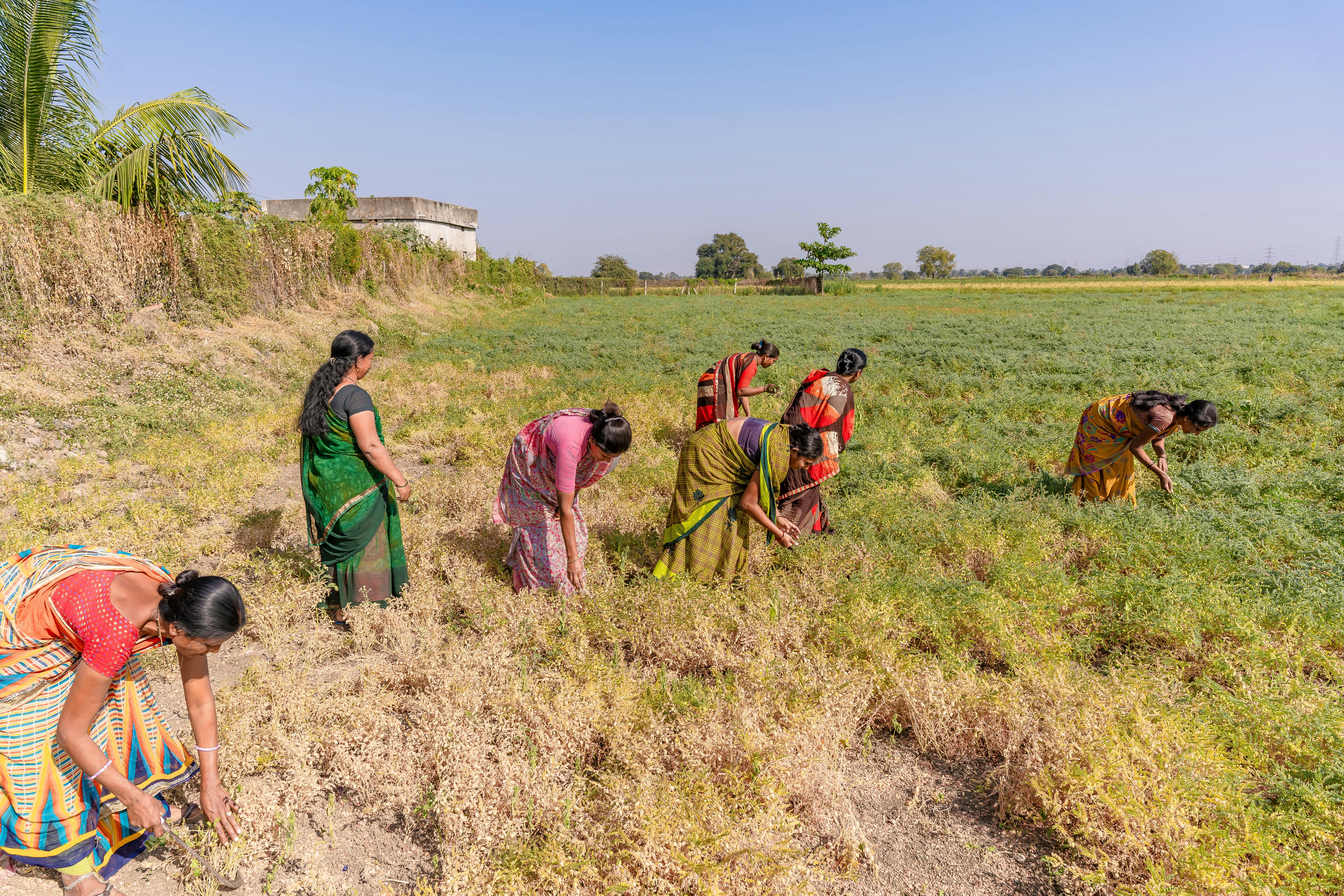
Moreover, although women play an essential role in agriculture and rural economies, resource scarcity affects them disproportionately, directly impacting their productivity and yields. Land ownership of agricultural land, often governed by male-dominated structures, hinders their ability to practice climate-resilient agriculture. This inequality is striking: less than 15% of agricultural landowners worldwide are women, significantly disadvantaging them in terms of property rights and economic autonomy.
Access to Drinking Water
Climate disruption generates numerous natural disasters such as floods, extreme precipitation, and severe droughts, directly worsening freshwater reserves worldwide. When water becomes scarce, women are the first impacted. They primarily bear the burden of finding water, regardless of the duration, distance, and difficulty of the journey. According to the UN, 2.3 billion people live in countries facing water stress, and in 80% of households, women are responsible for water collection.
This responsibility also intensifies pressures on girls, sometimes forced to drop out of school to help their mothers bear this additional burden. Facing these challenges, UN Women calls on COP30 to adopt a gender equality plan, an essential condition for effective climate action.
Health Impact
Physical and Mental Health
Climate change exposes women to particularly high health risks due to their living conditions, work environment, social behaviors, and biology. These risks manifest in multiple ways:
Air pollution, particularly from fossil fuel emissions, causes an increase in endocrine disruptors with direct impacts on women’s health (breast cancer, endometriosis, fertility disorders). Climate disruption also worsens the spread of vector-borne diseases such as malaria, to which women are particularly vulnerable, especially during pregnancy.
Psychologically, stress and depression increase when facing resource shortages for meeting family needs, particularly in cases of water stress. The destruction or inadequacy of health infrastructure further limits access to essential care.
Finally, female mortality related to climate disruption is increasing, notably for physiological reasons: their bodies are more sensitive to heat waves and extreme cold. During the 2003 heat wave in France, the mortality rate among women was 15% higher than among men.
Sexual Health and Reproduction
Access to health and medical assistance is greatly reduced following a natural disaster, further exposing women to major health risks, particularly regarding sexuality and reproduction. Climate change affects maternal and neonatal health with increased stillbirths, lack of prenatal monitoring, and increased spread of vector-borne diseases.
Reduced access to care also means contraceptive shortages, resulting in unwanted pregnancies and dangerous abortions that increase maternal morbidity. Extreme temperatures, poor air quality, and lack of drinking water have direct negative impacts on women and girls, particularly during pregnancy. During heat waves, the probability of premature birth increases by approximately 26%.
Increased Tensions and Instability
Violence Against Women
According to the UN Spotlight report, climate change intensifies social and economic tensions that fuel increased violence against women and girls. For example, we observe a 28% increase in femicides worldwide during severe heat waves. Each extreme event such as droughts, floods, or storms causes population displacement, insecurity, poverty, and broader institutional collapse that can reinforce and encourage norms and behaviors that increase violence.
Moreover, climate change impacts exacerbate a country’s economic, political, and social instability, particularly in areas where women and girls are already vulnerable. For example, child or forced marriages may constitute a harmful adaptation strategy to cope with economic difficulties caused by climate change.
Businesses Facing Gender and Climate Issues
Given the scale of these challenges, companies can no longer ignore the gendered dimension of climate change in their operations and value chains. Integrating gender equality into climate strategies is not just an ethical issue: it’s a lever for performance, resilience, and measurable positive impact.
Several tools are at their disposal:
- Risk mapping: This step involves identifying how a company’s activities affect women and men differently in its operational areas and supply chains.
- Incorporating gender into CSR and climate policies by integrating gender equality criteria into responsible purchasing policies or raising employee awareness.
- Supporting women in at-risk sectors, particularly in agriculture with the SUTTI solution developed by Ksapa.
- Strengthening human rights approach: establishing grievance mechanisms, assessing impacts and risks, strengthening dialogue with affected communities while ensuring women’s participation.
- Measuring and communicating impact: developing performance indicators aligned with international standards, producing non-financial reports in accordance with CSRD expectations, implementing responsible communication.
This list of tools is not exhaustive but demonstrates that companies have the means to act and sufficient influence to raise awareness among populations on gender issues, and more broadly on human rights. Ksapa, through its expertise, supports companies in various sectors on these ESG and gender issues, primarily in implementing these tools through clear methods compliant with OECD standards.
Toward Collective Action: Recommendations and Perspectives
Women’s Representation in Political and Economic Decisions
At COP30, women advocated for gender equality, particularly in climate transition. Indeed, there can be no climate justice without gender equality. Negotiations recognized the impact of climate change on women, and measures were proposed ranging from financing and awareness-raising to facilitating access to leadership positions.
Social rights are finally being considered in the transition, which implies guaranteeing labor rights, access to health, education, and social protection. This advancement concerns workers in transitioning sectors, small farmers, rural economies, and vulnerable populations, often neglected during accelerated transitions.
Overcoming Structural Obstacles
Unfortunately, the action plan discussed at COP30 faces a major obstacle: the lack of consensus among countries on the very definition of gender. Beyond women, all vulnerable people and LGBTQI+ populations suffer from these political blockages, their situation remaining marginalized in climate negotiations.
Facing these institutional resistances, companies can play a driving role by adopting inclusive definitions of gender in their internal policies, recognizing the diversity of vulnerabilities to climate change, and sharing best practices from their initiatives. By acting this way, they contribute to changing mindsets and accelerating a truly just and equitable climate transition.
Credit: Pexel

Solène travaille au sein de l'équipe Ksapa en tant que consultante spécialisée en droits humains et développement durable.
Très concernée par les questions ESG, elle contribue à des enjeux climatiques, d'économie circulaire ou encore de salaire décent et de conditions de vie au travail. Elle a précédemment travaillé au sein de l'équipe Développement durable de Beiersdorf, où elle s'est occupée des questions d'approvisionnement responsable et de droits humains.
Solène est titulaire d'un master en marketing et communication, ainsi que d'un master en industries créatives et innovation sociale de l'EDHEC Business School.
Elle parle français, anglais et espagnol.