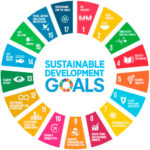

The World Benchmarking Alliance‘s comprehensive 2026 Benchmark Hub represents a watershed moment in corporate accountability—the first simultaneous assessment of 2,000 of the world’s most influential companies across seven systemic transformations spanning social equity, climate action, nature restoration, digital inclusion, sustainable food systems, urban development, and financial system alignment. These 2,000 corporations collectively generate $53 trillion in revenues, account for 54% of global emissions, directly employ 107 million people, and support 550 million additional livelihoods through their value chains. Their decisions fundamentally shape whether we achieve a sustainable, equitable future.
The Scale of Corporate Influence on SDG Delivery
The 2026 Benchmark Hub confirms what sustainability practitioners have long understood: the private sector’s role in achieving the SDGs is not optional—it’s determinative. The concentration of economic power, environmental impact, and employment within these 2,000 companies means their collective choices will largely define whether we meet or miss 2030 targets.
Drawing on seven years of sector-specific research, the Alliance has created an evidence base spanning twelve distinct benchmarks, from the Corporate Human Rights Benchmark to the Nature Benchmark, from Digital Inclusion to Urban Systems. Each assessment employs rigorous methodologies grounded in international frameworks, stakeholder consultations, and current best practices. The resulting dataset offers unprecedented granularity on corporate performance across hundreds of indicators.
Top leaders offer models that can be replicated
The numbers are striking: the average score across assessments remains alarmingly low, with most benchmarks showing companies achieving less than 30% of possible points. Yet this sobering reality coexists with proven solutions. Leading companies in every sector demonstrate that ambitious action is feasible—their approaches provide replicable models for laggards. The performance gap between leaders and laggards isn’t rooted in technical impossibility; it reflects choices about priorities, investment, and accountability.
Correlation of Performance Across Issues Confirming the Systemic Approach Underlying Sustainable Transformation
This evaluation also reveals cross-cutting profiles. Companies that excel in one area—for example, human rights—tend to also outperform on climate and nature, suggesting that sustainability excellence stems from deeply embedded organizational cultures and governance systems rather than isolated initiatives. This correlation reinforces the argument that sustainable transformation requires a systemic approach rather than fragmented programs.
Five Critical Action Levers Revealed by the Data
The 2026 assessment identifies five high-impact levers where scaled action could deliver disproportionate SDG progress:
Lever 1: Mobilizing the $1.3 Trillion Climate Investment Opportunity
Companies can close up to 30% of the annual clean-energy investment gap needed by 2030 without breakthrough technologies—simply by scaling proven investment levels already demonstrated across sectors. This isn’t aspirational; it’s observational. The pathway exists; execution is the barrier.
Lever 2: Addressing the Living Wage Crisis
Less than 5% of major companies pay living wages, exacerbating the global cost-of-living crisis. This represents both an acute social justice issue and a significant business risk, as purchasing power erosion undermines consumer markets while workforce instability threatens operational continuity.
Lever 3: Advancing Nature-Positive Business Models
Only 9% of companies currently quantify nature-related risks, creating substantial first-mover advantages for those who act decisively. The integration of natural capital into business strategy remains nascent, yet regulatory momentum and investor expectations are accelerating rapidly.
Lever 4: Building Resilient, Responsible Supply Chains
Just 10% of companies assess human rights risks throughout their supply chains, while only 20% trace products to understand nature impacts. This visibility gap leaves supply chains vulnerable to disruption while perpetuating environmental and social harms that increasingly carry material financial consequences.
Lever 5: Strengthening AI Accountability in the Tech Sector
While 38% of major tech companies publish ethical AI principles, none disclose human rights impact assessment results. As AI systems reshape economies and societies, this transparency deficit poses systemic risks that require urgent attention from corporate boards and policymakers alike.
From Assessment to Acceleration – Activating the Levers
The true value of this comprehensive SDG review lies not in ranking companies but in clarifying the actionable pathways forward. For corporate leaders, investors, policymakers, and civil society organizations, these benchmarks provide three essential tools for acceleration:
Diagnostic Clarity: The assessments reveal precisely where companies fall short—not through subjective critique but through evidence-based measurement against established standards. This specificity enables targeted improvement strategies rather than diffuse sustainability rhetoric.
Proven Practice: By showcasing sector leaders, the benchmarks demonstrate that ambitious performance is achievable today. Companies can study these frontrunners’ approaches, adapting successful strategies to their own contexts rather than reinventing solutions.
Accountability Infrastructure: Public benchmarking creates reputational incentives and stakeholder pressure that complement regulatory requirements and market signals. The transparency these assessments provide empowers investors to direct capital strategically, enables consumers to make informed choices, and equips policymakers with data to design effective interventions.
For companies serious about SDG contribution, the path is clear: prioritize the five high-impact levers, measure performance rigorously using established frameworks, commit to transparent reporting, and scale investment to levels proven feasible by sector leaders. The 2026 benchmarks eliminate the excuse of uncertainty about what good performance looks like or whether ambitious action is technically feasible.
Conclusion
As we enter the final push toward 2030, the World Benchmarking Alliance’s comprehensive assessment delivers an essential service: it cuts through ambiguity to reveal exactly where corporate action can drive maximum SDG impact. The five levers identified—climate investment mobilization, living wage implementation, nature-positive transformation, supply chain resilience, and AI accountability—represent concrete, measurable priorities that companies can act on immediately.
The data makes one reality unmistakably clear: proven solutions, effective mechanisms, and growing momentum already exist. The question is no longer whether sustainable business transformation is possible, but whether the world’s most powerful companies will choose to deploy the levers now at their disposal. With 2,000 influential corporations accounting for such a significant share of global economic activity and environmental impact, their decisions in the next five years will fundamentally determine whether we achieve or abandon the 2030 agenda. The benchmark has illuminated the path; now comes the hard work of walking it.goal that Ksapa aims to support, for a truly responsible economy.
Photo credit: Freepik

Président et Cofondateur. Auteur de différents ouvrages sur les questions de RSE et développement durable. Expert international reconnu, Farid Baddache travaille à l’intégration des questions de droits de l’Homme et de climat comme leviers de résilience et de compétitivité des entreprises. Restez connectés avec Farid Baddache sur Twitter @Fbaddache.