
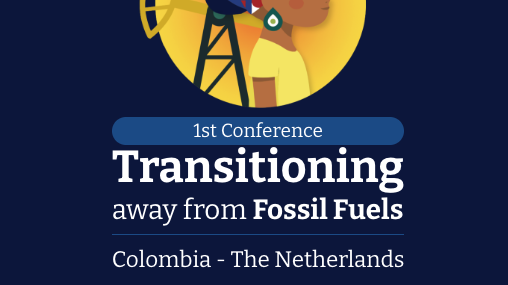
The port city of Santa Marta, Colombia, hosted an unprecedented diplomatic event in late April 2026: the world’s first international conference dedicated entirely to phasing out fossil fuels. More than fifty countries — representing nearly half the global population — spent five days debating concrete pathways to move away from oil, gas, and coal. The timing was charged. A new wave of conflict in the Middle East had triggered a sharp spike in fuel and aviation prices, delivering a stark geopolitical reminder of what energy dependence really costs. The climate imperative and the security imperative had, for once, merged into a single, unavoidable argument.
And yet Santa Marta produced no binding commitments. The United States, China, India, and the Gulf states — the world’s top emitters — were absent. Meanwhile, coal freighters sat anchored in the bay throughout the proceedings, a quietly eloquent symbol of the gap between ambition and economic reality. The conference, co-organized by Colombia and the Netherlands, was designed explicitly to work around the gridlock of UN climate COPs, where the consensus rule has long allowed fossil fuel interests to block any direct discussion of production phase-down. In that sense, Santa Marta was less a summit than a signal — one that matters enormously, but one that will only translate into impact if the private sector, investors, and on-the-ground practitioners step in to do the harder work.
A Coalition of the Willing — and Its Limits
The Santa Marta conference represented a genuine shift in the architecture of global climate diplomacy. Rather than waiting for universal consensus, a coalition of willing states chose to move forward. Colombian Environment Minister Irene Velez Torres described the gathering as “a new power” — one grounded not in the largest emitters, but in the broadest possible constituency for change, spanning consumer nations, producer states, and climate-vulnerable developing countries alike.
The tangible outcomes were meaningful. Scientists published a twelve-measure “menu” of actionable policies for governments, starting with a moratorium on new fossil fuel extraction and infrastructure. A dedicated scientific expert group on energy transition was launched to advise cities, regions, and countries as they develop their own roadmaps. Several nations used the platform to present national phase-out timelines — the most discussed being a detailed 18-page roadmap committing to sector-by-sector decarbonization by mid-century. A follow-up conference is already scheduled for Tuvalu in late 2026, ahead of COP31 in Antalya, Turkey. The intent is clear: keep fossil fuels at the center of international climate discussions, and build toward a global roadmap to be presented before the next COP.
The limits, however, are just as clear. The absence of the largest emitters blunts the political weight of any outcome from Santa Marta. Major fossil fuel producers — including Norway, Canada, Angola, and Nigeria — attended, but remain caught between climate commitments and fiscal systems still heavily reliant on hydrocarbon revenues. Colombia itself embodies the contradiction: Cerrejon, one of the world’s largest open-pit coal mines, operates just 125 miles from Santa Marta. The financial scale of replacing fossil fuel infrastructure globally is staggering, and the burden falls most heavily on developing economies that contributed least to the problem.
Santa Marta was unambiguous about where the world needs to go. It was considerably less clear about how to get there — and who will pay for it. That gap is not a reason for pessimism. It is an invitation for action.
Three Structural Gaps Between Diplomacy and Delivery
The scientific document released at Santa Marta offers a compelling policy framework. But there is a fundamental difference between a government measure and its effective implementation across supply chains, territories, and communities. Three structural gaps stand out.
The financing gap in emerging markets. The nations most exposed to climate disruption — small island states, low-income economies across Africa, Southeast Asia, and Latin America — are also those with the least access to the capital required to finance their energy transitions. Just Energy Transition Partnerships (JETPs), which blend public and private financing to de-risk investment in decarbonization, have shown promise but remain far too limited in scale and too complex to deploy at speed. Blended finance mechanisms — where development finance institutions, philanthropic capital, and commercial investors share risk — are structurally underused, even as the need has never been greater. The trillion-dollar climate finance gap will not be closed by government pledges alone.
The supply chain coherence gap. Multinational corporations have made net-zero commitments at an unprecedented pace. But their Scope 3 emissions — those generated by their suppliers, logistics partners, smallholder farmers, and frontline workers — typically account for 70 to 90 percent of their total carbon footprint. These actors at the base of global supply chains — small producers, cooperatives, informal workers — have neither the tools, the data infrastructure, nor the financial resources to measure or reduce their own emissions. Net-zero roadmaps remain anchored at headquarters. They need to reach the field.
The measurement and accountability gap. Without reliable, granular, independently verified data, transition commitments are aspirational at best and greenwashing at worst. The rapid proliferation of mandatory disclosure frameworks — from the EU’s Corporate Sustainability Reporting Directive (CSRD) and Corporate Sustainability Due Diligence Directive (CSDDD) to the TCFD, the Science Based Targets initiative (SBTi), and emerging human rights due diligence laws across Europe and beyond — creates growing normative pressure. But the quality of underlying data remains deeply uneven. Investors and regulators alike are flying partially blind when it comes to assessing real-world transition progress.
These three gaps define the terrain where the energy transition will actually be won or lost — not in conference halls, but in agricultural cooperatives in Southeast Asia, in logistics corridors in West Africa, in the capital structures of emerging market infrastructure funds.
How Ksapa Bridges the Gap Between Ambition and Impact
At Ksapa, we work from a core conviction: the fossil fuel transition will not be delivered by treaties or ministerial declarations alone. It will be built sector by sector, territory by territory, by engaging the real economic actors in global supply chains — from multinationals down to the smallholder farmers and workers who shape the majority of their environmental footprint. That has been our work for over a decade, combining analytical rigor, deep field presence across Asia, Africa, and Latin America, and purpose-built digital innovation.
Regenerative agriculture and carbon programs at scale. Large-scale agricultural transition and carbon programs. Our RegenCC program in the Philippines engages coconut farmers and mills in a regenerative agriculture model certifiable under a Verra standard. In Indonesia, our natural rubber program with Michelin, under the CASCADE project in Sumatra, demonstrates that improving environmental and social practices across agricultural supply chains is achievable — while also raising smallholder incomes, generating €25 locally over 10 years for every €1 invested. These programs show that transition is not a burden imposed on rural communities, but an economic opportunity when thoughtfully designed..
The SUTTI platform: reaching the last mile. A just energy transition cannot leave behind the workers, farmers, and vulnerable populations who have the least voice and the most to gain or lose. Our SUTTI digital platform was built specifically to engage these populations where they are, in their own languages, with learning modules tailored to their operational realities — covering labor rights, workplace safety, responsible sourcing, and the practical meaning of sustainability standards. Critically, SUTTI functions in low-connectivity environments, making it genuinely deployable across geographies where digital infrastructure remains limited. It is the missing link between a multinational’s ESG commitments and the reality of its supply chain.
ESG risk mapping and accountability tools for investors and corporates. As mandatory due diligence frameworks proliferate globally — CSRD, CSDDD, the German Supply Chain Act, emerging regulations in the UK, Australia, and beyond — companies and their investors need more than frameworks. They need verified data, independent audits, and credible risk cartography. Ksapa’s teams provide precisely that: rigorous ESG risk assessments, human rights due diligence, and impact measurement that allow financial actors to move from ambiguity to evidence-based capital allocation. We turn regulatory pressure into competitive advantage.
Blended finance structures for the emerging market transition. Closing the climate finance gap in developing economies requires creative capital structuring, not just more commitments. Ksapa designs and supports investment vehicles — such as our IREN Agri Vehicle model — that combine private capital, public guarantees, and carbon revenues to finance agricultural transition in markets where perceived risk is high and institutional capital remains scarce. These structures are the financial architecture that can actually mobilize the billions needed for a genuine global transition, complementing but not waiting for government-led mechanisms like JETPs.
Santa Marta placed an essential stone in the architecture of global climate governance. It demonstrated that a coalition representing half of humanity is ready to move beyond the gridlock of consensus-based multilateralism and advance toward a fossil-free future. But the foundational elements of a real transition — verified data, accessible finance, and mobilization of actors at every level of global supply chains — remain to be built. That is the work of this decade. That is Ksapa’s work.
Learn more about our transition programs and sustainability solutions for corporations and investors — explore our 2026 report, “Towards 2030: The Sustainability Delivery Decade“.

CEO and Co-Founder of Ksapa. Member of sustainability boards at major industrial groups and impact investment committees. Drawing on 25 years of experience working with multinationals, mid-size and small businesses across value chains, governments, and international organizations, Farid Baddache focuses on integrating human rights, climate, and ESG governance as drivers of business resilience and competitiveness. Author of several books on sustainability and responsible business. Connect on Bluesky @faridbaddache.bsky.social